I had planned to go directly to an Accusump and forego an oil sump baffle altogether. Certainly on this forum baffles get no love, and any data showing their effectiveness is non-existent. A few things changed my mind:
1) I had a burning desire to inspect and replace my rod bearings before they conspired to ruin my day.
2) While the sump is off, adding a baffle is very little effort.
3) So too is installing a front main seal guard to protect against shredded belt ingestion.
4) I realized that any benefit gained with the baffle would still be beneficial with an Accusump.
A very thorough description of the rod bearing replacement procedure can be found here:
My rod bearing change proved relatively uneventful, with some wear visible on the old bearings, but nothing alarming.
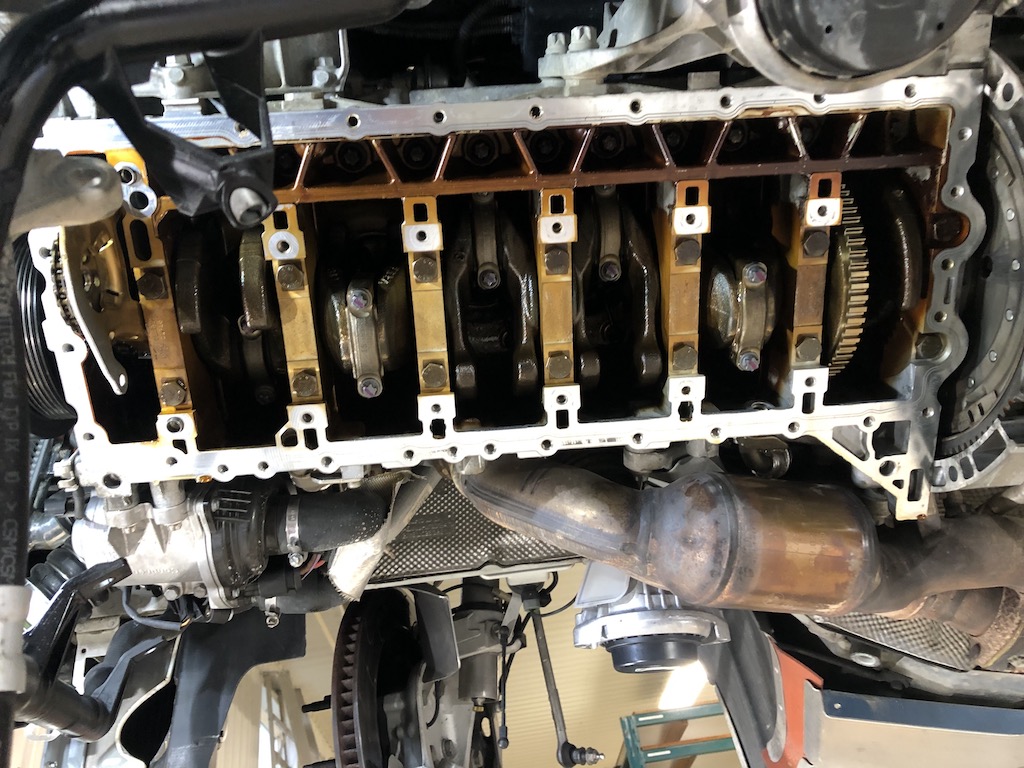
Bottom End
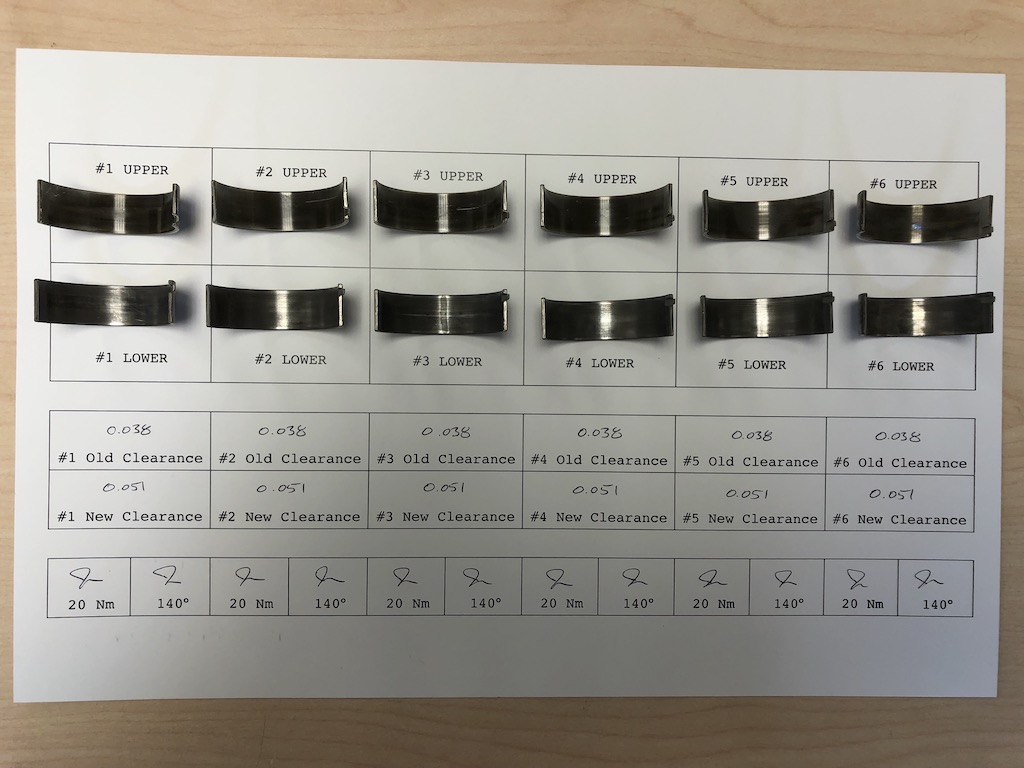
I checked clearances before and after with Plastigauge.
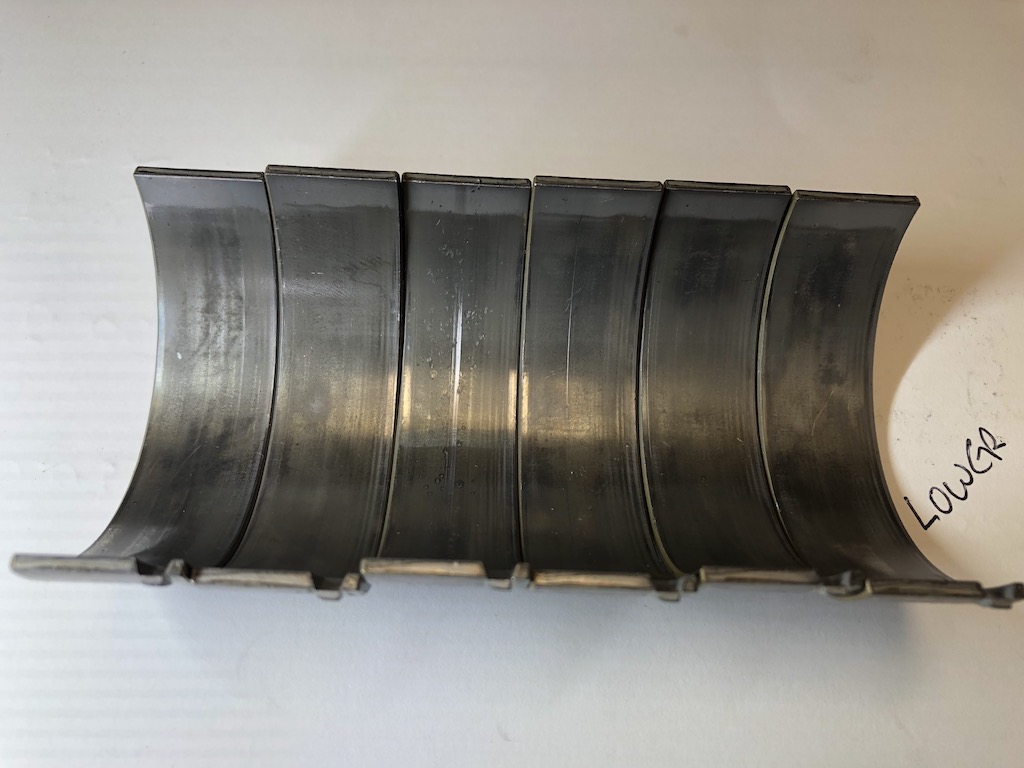
Lower Bearings
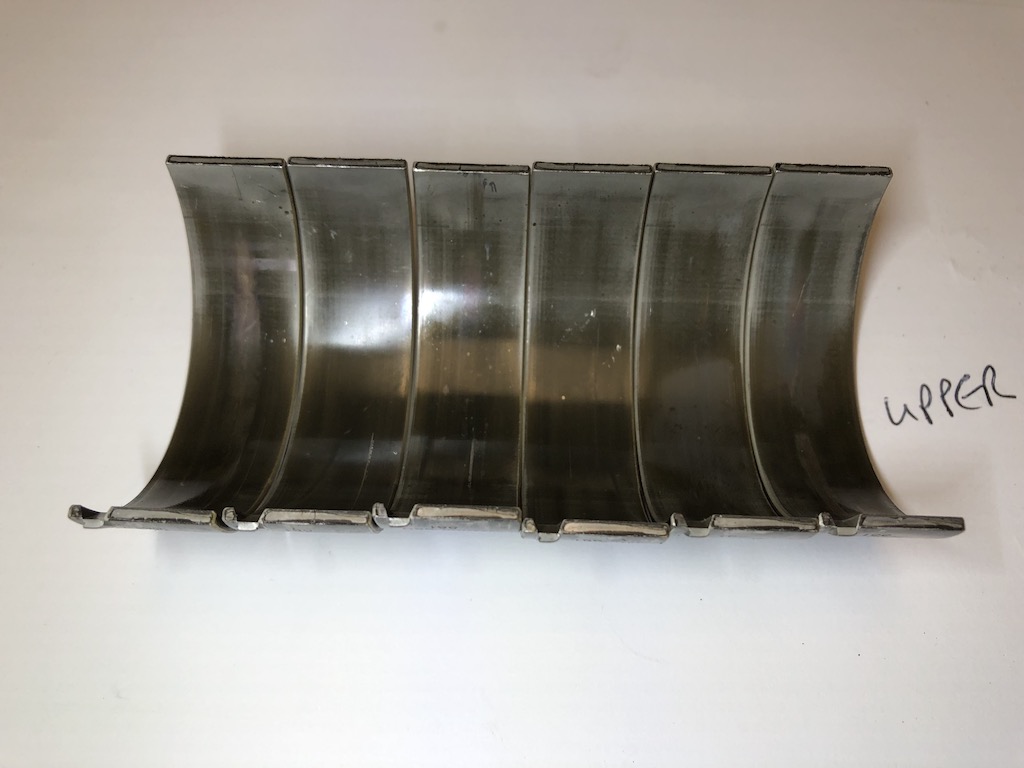
Upper Bearings
I used King replacement bearings, which provide slightly more clearance (0.051 mm) than original (0.038 mm).
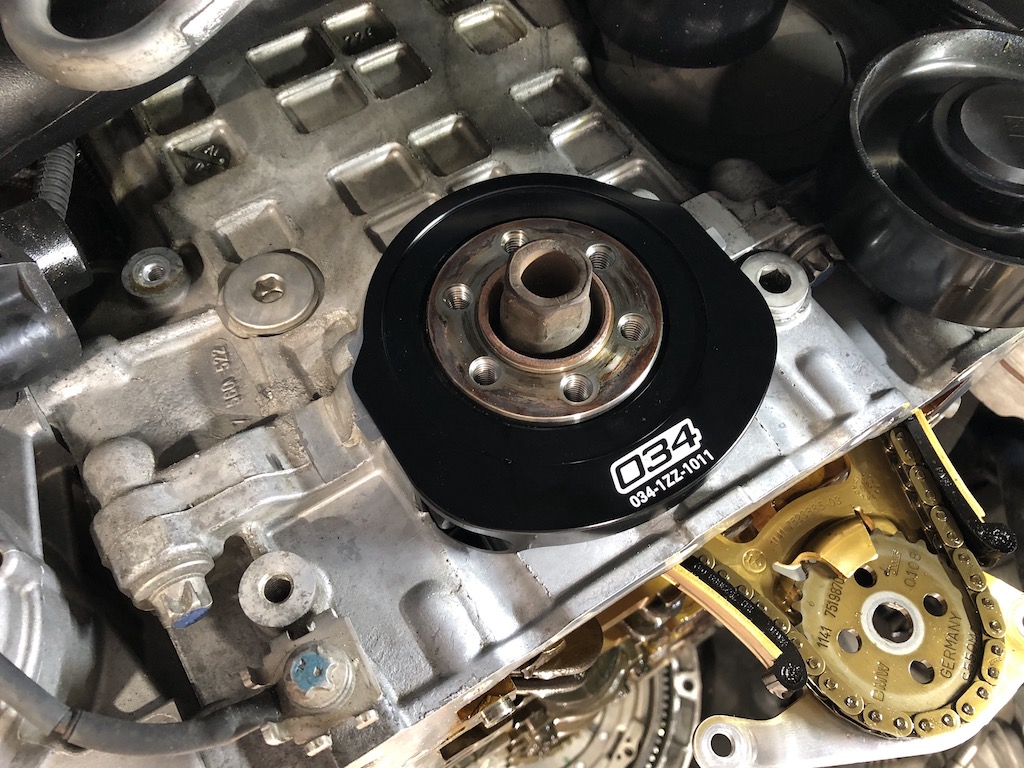
There are a few options when choosing a crank seal guard. I chose one by 034Motorsport. With the intercooler, radiator, the crank pulley removed, installation of the guard is easy.
Removing the sump requires supporting the engine from above and removal of the front subframe. This fully exposes the engine mounts for inspection, and in my case revealed that the RH engine mount had failed. I had expected it to be potentially heat damaged due to its proximity to the downpipes, but the damage appeared to be mechanical as opposed to heat-related.
When it comes to the baffle, there are a few choices. I chose the AAF baffle because it encloses a larger oil volume than the VAC baffle.
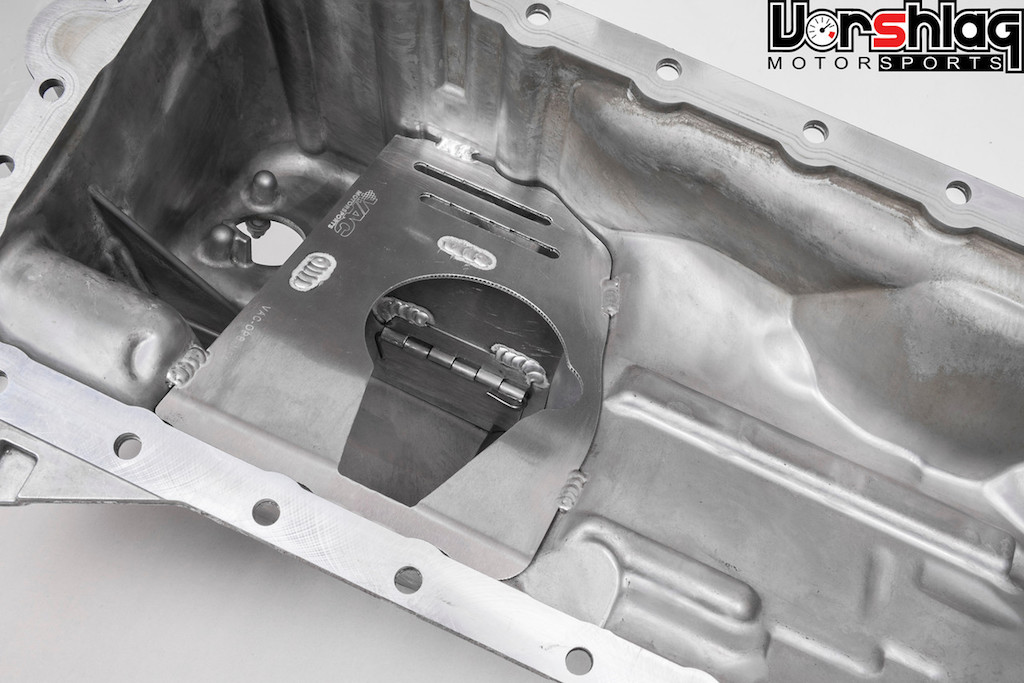
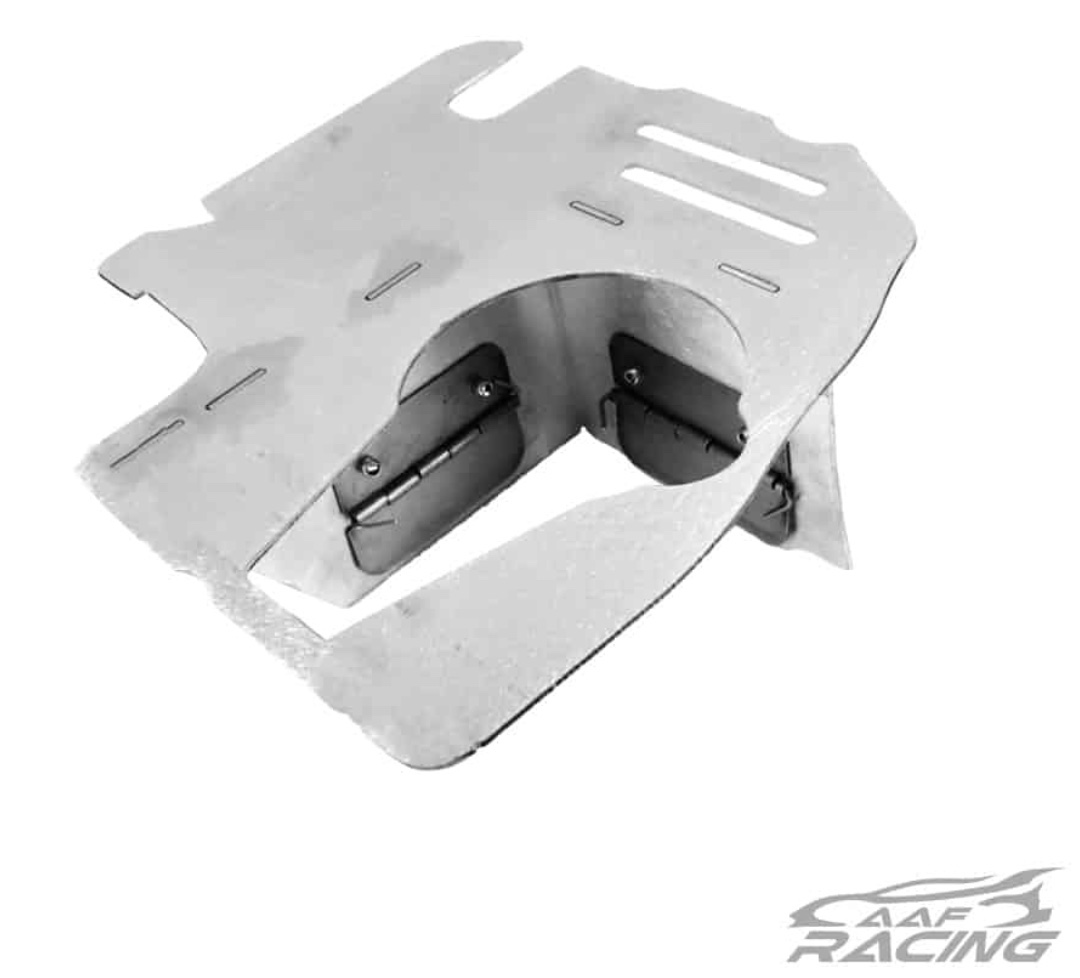
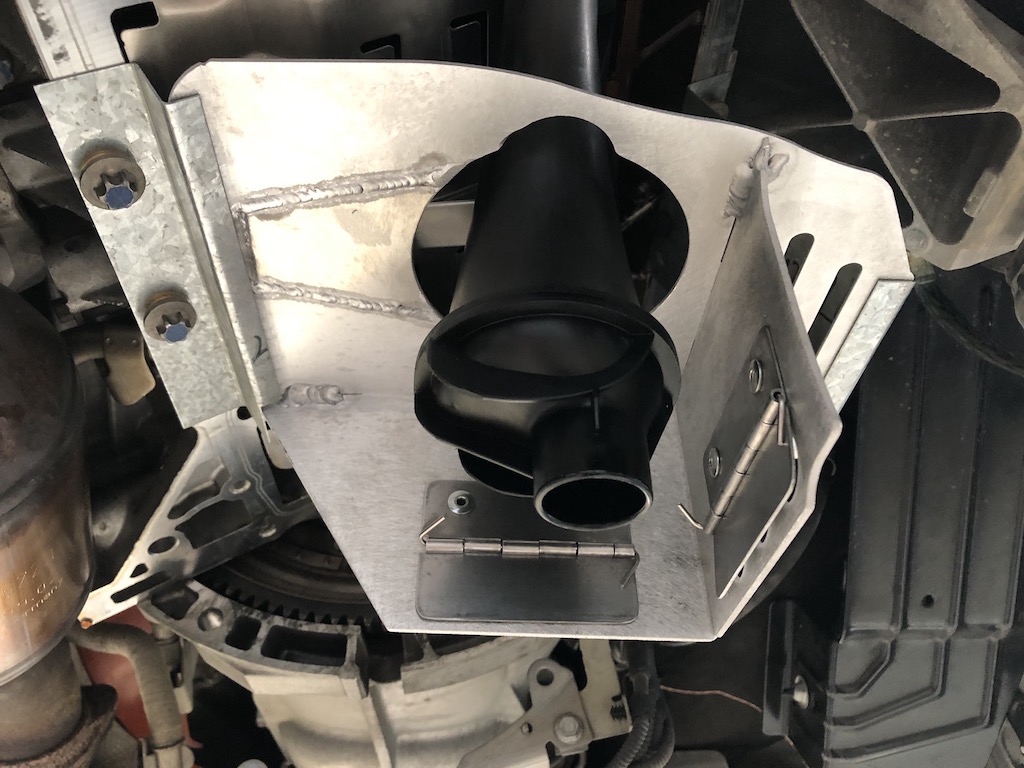
Both incorporate a keyhole shaped cutout to accommodate the support leg on the oil pickup tube. To my eye this is a serious deficiency in the design, as the keyhole slot will allow oil to pour out of the sump through the slot under left turns. Essentially, the slot negates the whole point of having a baffle. The following image shows the relative position of the pickup and baffle without the oil pan in place.
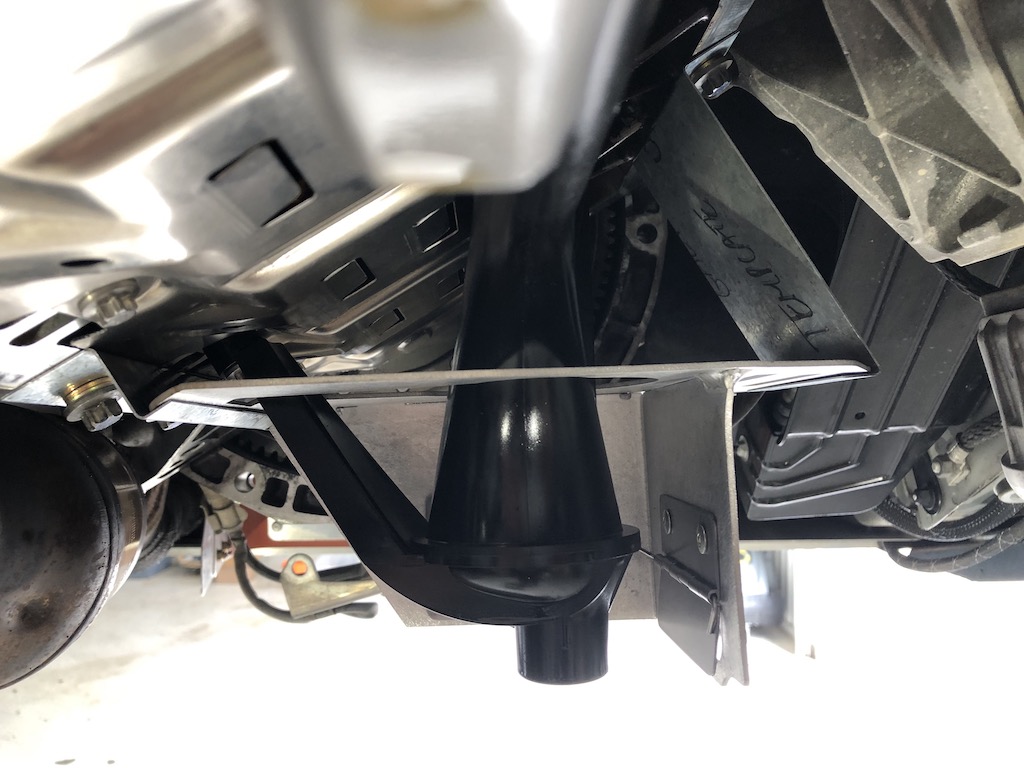
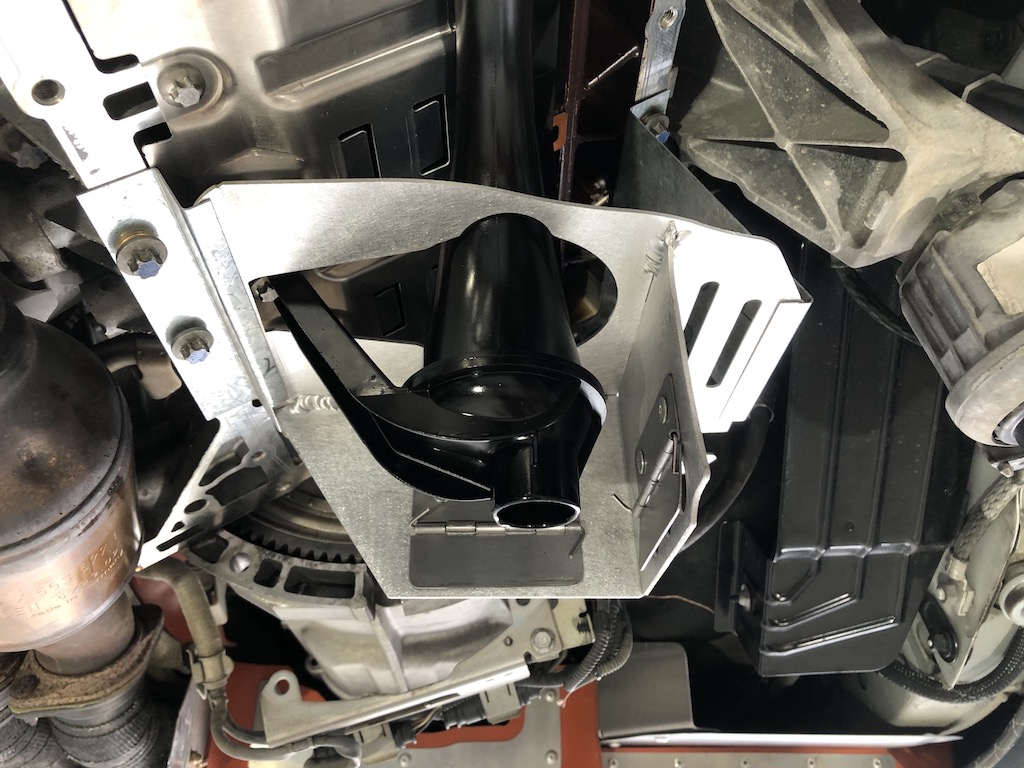
The above images show the baffle as built mocked up in place.
To address my concern, I welded a plate to block the keyhole.
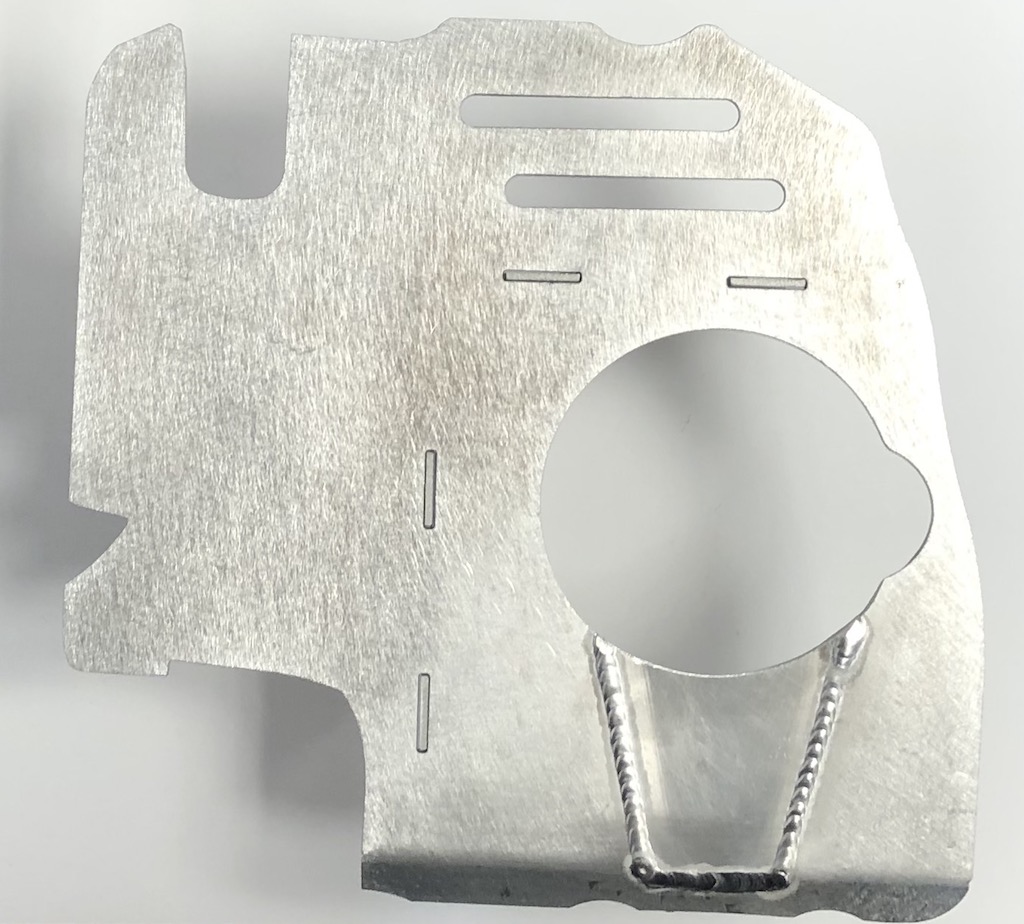
Blocking the keyhole required removing the diagonal brace from the oil pickup tube. To recover some strength and stiffness, I installed an aluminum brace.
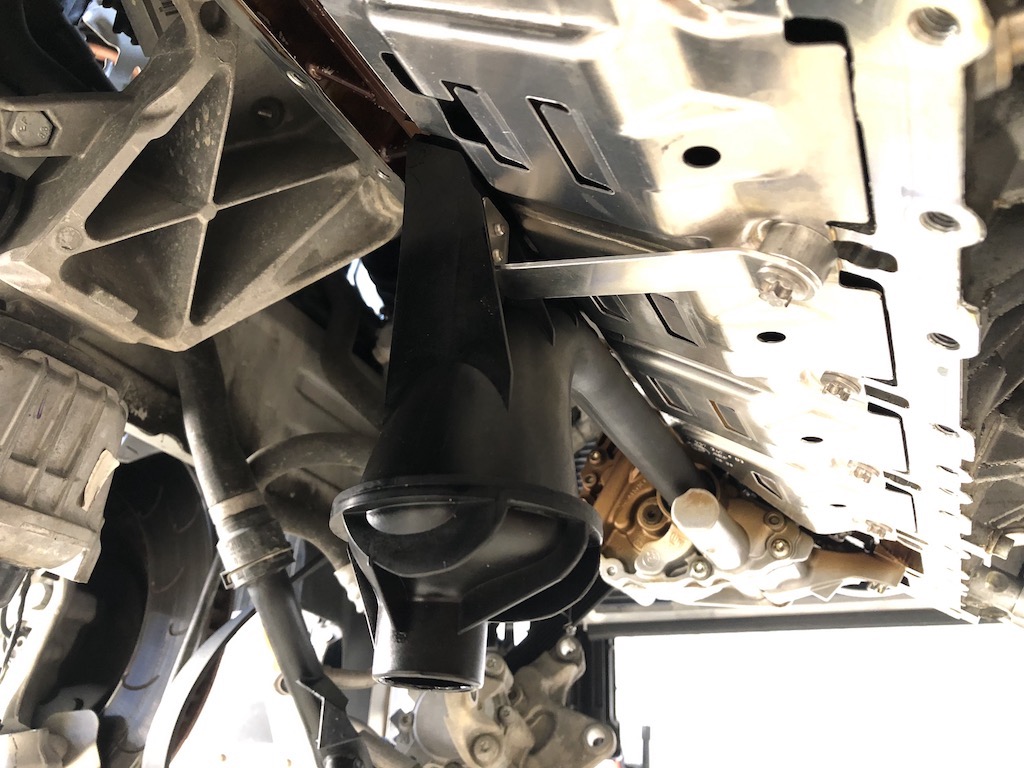
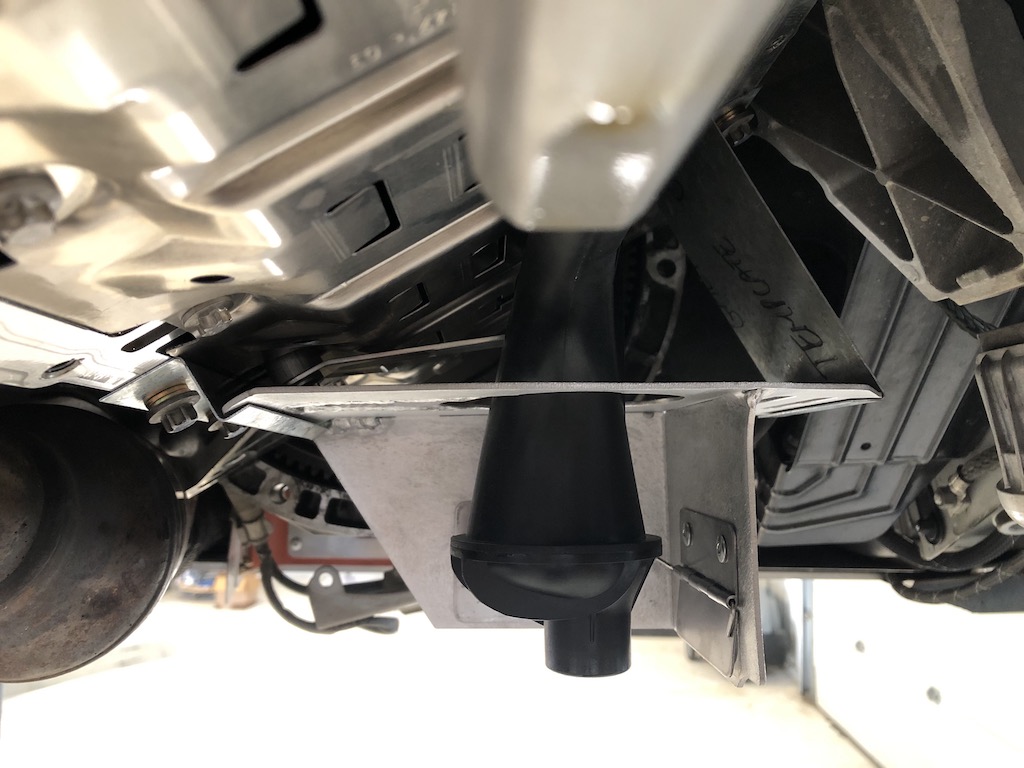
Of course the baffle needs to be welded into the oil pan. The pan came with no instructions for installation, so welding is up to you to figure out. The sump is ENAC AC-46000 alloy (BMW conveniently casts the alloy identification into it). This means that 4043 filler is a good choice for welding. The sump appears to be anodized, so it is necessary to abrade off the anodic layer before welding after first thoroughly cleaning and degreasing the sump. I preheated the sump to 100°C and welded with TIG. The baffle required a small amount of fitting to form a tight fit on the critical right hand side. The sump was no worse for the wear after welding, showing no signs of distortion.
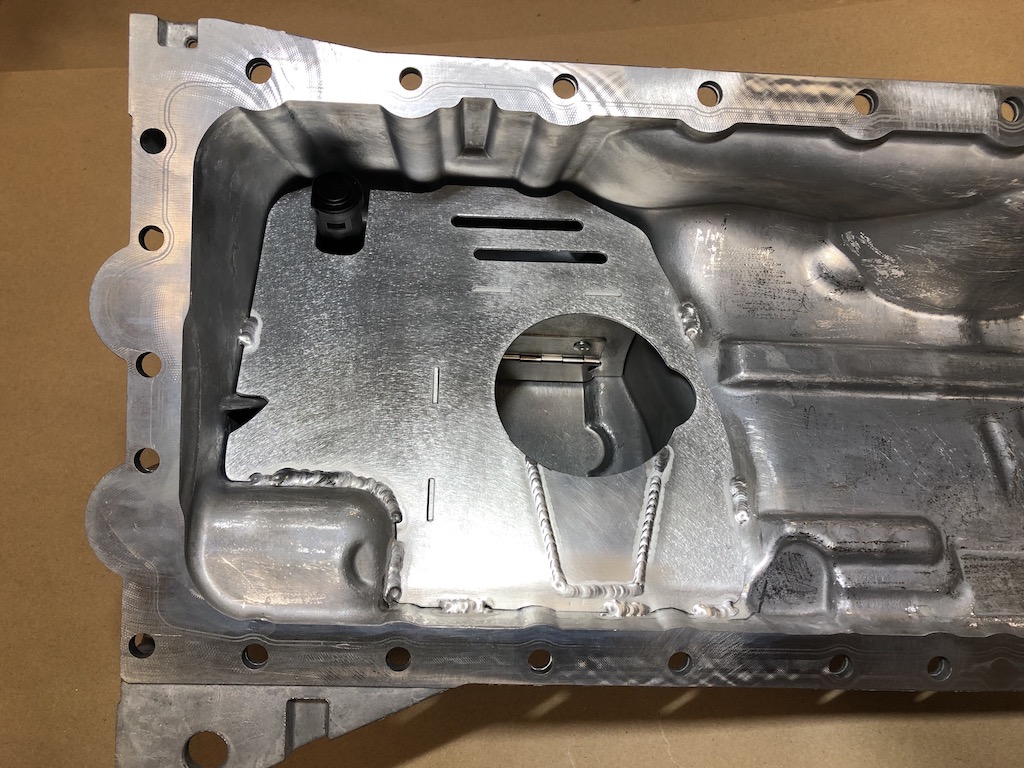
The total oil volume below the baffle top plate is about 4 liters of which perhaps half is effectively constrained and available during cornering. Assuming an oil flow rate of 40 liters per minute (about 10 gpm), the engine will consume 2 liters in about 3 seconds. In other words, the baffle might provide only a few seconds of protection unless inflow into the sump replenishes the volume.
Those with an N55 have the (pricey) option of installing a secondary scavenge pump to solve their oiling woes:
https://grassrootsmotorsports.com/pr...ressure-issue/
As to how effective the baffle is, there isn’t a simple answer, but I do have a local track that allowed me to collect good data. I will follow up with a more detailed before/after comparison with some logged oil pressure data in my next post.